
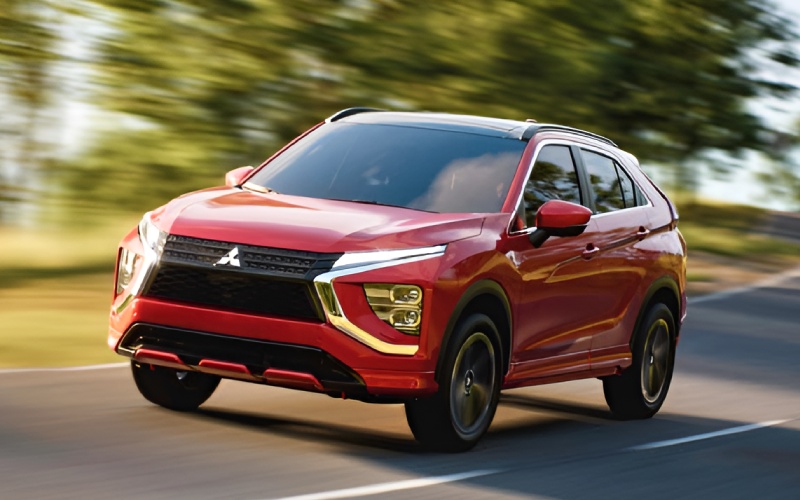
Southtowne Mitsubishi - Which AWD is better for mixed Utah terrain — S-AWC on Eclipse Cross or HTRAC on Tucson around St. George, UT?
When drivers research compact SUVs for Utah’s unique geography, one question rises above the rest: Which AWD system inspires more confidence on everything from sunbaked frontage roads to gravel byways and sudden mountain rainstorms? Below is a deep dive into two compelling approaches—Mitsubishi’s Super-All Wheel Control (S-AWC) on the Eclipse Cross and Hyundai’s HTRAC AWD on the Tucson—tailored to what matters most around St. George, UT and across the Wasatch Front.
Start with the fundamentals. S-AWC is standard on every Eclipse Cross trim. It integrates the SUV’s Active Stability Control, Anti-lock Braking, and traction management with Active Yaw Control to distribute torque both front-to-rear and side-to-side. The system offers drive modes—Auto, Snow, and Gravel—so the vehicle can adapt its behavior to real surfaces. HTRAC, by contrast, is an available system on Tucson. It modulates torque primarily between front and rear axles and includes Snow mode on AWD-equipped trims. Both systems improve traction, but S-AWC’s added layer—torque vectoring that helps the SUV rotate into a turn and stay stable as grip changes—can elevate driver confidence when pavement ends or when traction varies across lanes and shoulders.
How that feels on the road: S-AWC tends to give the driver a poised, linear response. Turn in across uneven surfaces, and the system quietly balances torque to help the line remain steady. Roll into the throttle from a mid-corner bump and Eclipse Cross finds traction without drama. On Tucson with HTRAC, the vehicle remains secure and predictable, with rear-axle engagement kicking in as slip builds. It is effective and transparent, though it lacks the fine torque-vectoring nuance that is a hallmark of S-AWC on loose or mixed conditions.
The mode set matters for Utah. Snow is familiar, but Gravel deserves attention around trailheads and rural connectors near Washington County. Gravel mode in Eclipse Cross tells the system to anticipate low-mu surfaces and proactively balance torque, which helps keep momentum smooth without overworking traction control. Tucson’s Snow mode is genuinely helpful when the surface is slick and uniform; when grip alternates quickly between compacted dust, pebbled shoulders, and clean asphalt, S-AWC’s Gravel calibration can feel more settled and less busy.
Power delivery plays a role in how AWD systems perform, too. Eclipse Cross runs a turbocharged 1.5-liter four-cylinder tuned for early torque. That low-RPM response works beautifully with S-AWC, making it easier to pull away from lights, merge, or climb grades without revving high. Tucson’s standard 2.5-liter engine is smooth and well-matched to an 8-speed automatic, and hybrid versions add punch. Still, the Eclipse Cross turbo’s accessible torque pairs naturally with the AWD logic to keep progress calm and consistent—useful when traffic shuffles through changing surfaces or when leaving a gravel lot onto a busy road.
Braking and control also enter the picture. Eclipse Cross offers available paddle shifters, which many Utah drivers appreciate on long descents; cycling a few clicks to add engine braking helps maintain speed without riding the brake pedal. Tucson does not offer paddle shifters on most trims, so controlling downhill pace relies mainly on the transmission’s logic and the brake system. Both vehicles provide hill-related aids and robust stability systems, but having that extra layer of manual control can be reassuring on the steep grades that dot southern Utah and the Wasatch.
Technology that supports the driver seals the story. Eclipse Cross makes a Multi-View Camera System available on upper trims for a clear look around the vehicle when parking near trailheads or maneuvering in tight neighborhoods. Tucson’s available Surround View Monitor on top trims serves a similar role. Both models offer comprehensive safety suites, smartphone integration, and connected services—Mitsubishi Connect and Bluelink+. What stands out is the Eclipse Cross emphasis on blending that tech into an AWD-first chassis philosophy, rather than leaning on electronics alone to bridge traction gaps.
In short, for varied terrain and the quick weather shifts Utah can deliver, S-AWC’s torque-vectoring depth and dedicated Gravel mode provide a clear confidence advantage. HTRAC is a strong, well-executed AWD system, yet it is optional and not as nuanced in side-to-side torque control. For many shoppers comparing these two compact SUVs with Utah driving squarely in mind, that difference becomes the deciding factor.
- AWD architecture: S-AWC is standard and adds torque vectoring; HTRAC is optional and focuses on front-to-rear torque modulation.
- Drive-mode depth: Eclipse Cross includes Gravel mode for loose surfaces; Tucson offers Snow mode on AWD trims.
- Driver control: Paddle shifters available on Eclipse Cross aid long descents; Tucson generally omits them.
For real-world shoppers, think about your daily path. If weekend routines include gravel access roads or washboard surfaces before a hike, S-AWC’s greater traction finesse makes the drive smoother. If most miles are paved and you are drawn to a big touchscreen and spacious cargo area, Tucson has a compelling package. Either way, an extended test drive over familiar roads is the best way to feel the difference.
Frequently Asked Questions:
Does S-AWC improve on-road handling, or is it only for bad weather?
S-AWC benefits everyday driving by managing torque proactively, which can help the SUV track cleanly through corners and feel composed on patchy pavement. In adverse conditions, those same traits further stabilize the vehicle.
Is HTRAC AWD enough for gravel and light trails?
Yes, HTRAC adds helpful traction on mixed surfaces and is well-calibrated for most light-duty needs. Eclipse Cross simply brings more torque-vectoring nuance and a dedicated Gravel mode that many Utah drivers value.
Do I need special maintenance for S-AWC?
No special routine is required beyond the manufacturer’s normal schedule. As with any AWD vehicle, timely fluid changes and tire rotations preserve optimal performance.
Which should I test drive first if I split time between city errands and canyon outings?
Start with Eclipse Cross to feel how S-AWC and early turbo torque manage transitions from city streets to uneven surfaces. Then drive Tucson back-to-back. The contrast in traction behavior and throttle response usually makes the choice clear.
To explore both options in one visit—complete with routes that reflect local terrain—schedule a drive with Southtowne Mitsubishi. Our team is serving Orem, Provo, and St. George with insights tailored to Utah’s roads and the questions shoppers ask most. Bring your typical gear, plan a loop that includes your daily mix, and evaluate both AWD systems where the decision matters: on familiar ground.