


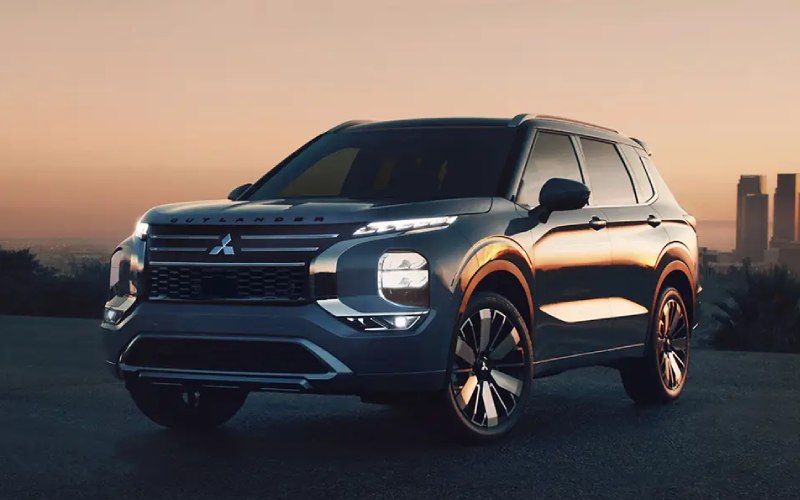
Southtowne Mitsubishi - Outlander S-AWC vs Subaru Symmetrical AWD — Utah Drivers Guide
Utah driving throws a little bit of everything at you—powder mornings up Little Cottonwood, slushy commutes along I-15, spring mud on farm roads in Utah County, and sandy washboard near the red rocks. Two names regularly top the shortlist for confident all-weather capability: Mitsubishi’s Super All-Wheel Control (S-AWC) in the Outlander and Subaru’s Symmetrical All-Wheel Drive. This guide explains how both systems work, what that means on real Utah roads, and why many drivers end up preferring the Outlander’s S-AWC once the weather turns.
At its core, S-AWC is a coordinated control system, not just a way to power four wheels. In the Outlander, an electronically controlled center coupling sends torque front to rear as needed, while Active Yaw Control uses subtle brake-based torque vectoring to help the vehicle rotate predictably through a corner. The system integrates traction control, stability control, and ABS logic so each component speaks the same language. You select the surface with a simple dial—up to six modes are available on most trims, including Eco, Normal, Tarmac, Gravel, Snow, and Mud—and S-AWC instantly recalibrates throttle mapping, torque split, shift behavior, and wheel braking strategy. In practice, this means surer launches on a snowy Murray side street, calmer mid-corner balance on a wet I-215 ramp, and steady progress on a rutted Forest Service spur above Alpine.
Subaru’s Symmetrical AWD is a full-time system known for its balanced, left-right weight distribution around a longitudinal BOXER engine. Depending on the model and transmission, it uses a mechanical center differential or electronically controlled clutch pack to send power where it is needed, aided by brake-based torque vectoring. Many Subaru models also include X-Mode drive programming for deep snow or light off-pavement travel. It is a robust, predictable setup with a long track record in winter climates.
How does that translate to Utah’s mixed conditions? Both systems excel at maintaining traction from a stop and keeping the vehicle moving in low-grip scenarios. Where S-AWC often feels different is in transitions—like when Provo Canyon alternates between dry patches, shaded black ice, and packed powder in a single mile. With S-AWC, the steering stays calm as Active Yaw Control trims wheel slip at the exact tire and at the exact moment it matters, and the selected drive mode tunes the vehicle for the surface you actually see out the windshield. On dry days, Tarmac mode sharpens responses without sacrificing stability, so you can enjoy a planted feel along SR-92 while still being ready for an unexpected dusting at higher elevations.
- Control philosophy: S-AWC layers torque distribution with Active Yaw Control to manage turning forces, not just wheelspin; Symmetrical AWD emphasizes a steady, balanced baseline with reactive torque transfer.
- Modes and customization: Outlander’s dial offers up to six distinct programs—Snow, Gravel, Mud, Tarmac, plus everyday Eco and Normal—so you can match Parleys Summit slush one morning and dry valley commutes the next; Subaru models offer X-Mode profiles that are also effective but vary by model and trim.
- Cornering confidence: S-AWC’s brake-based torque vectoring subtly helps the vehicle rotate and hold a line on slick on-ramps and canyon sweepers; Subaru’s system feels predictable and sure-footed with light brake-based assistance when slip begins.
- Off-pavement poise: In Gravel or Mud mode, S-AWC relaxes wheel-slip thresholds and optimizes torque delivery to keep momentum over washboard and shallow ruts—useful on graded county roads or trailheads near Spanish Fork; Subaru’s Symmetrical layout provides consistent traction with X-Mode enhancing low-speed control.
- Powertrain choices: Outlander is available as a gasoline model or as a plug-in hybrid (PHEV) with dual electric motors that deliver instant torque to each axle—great for fine control on icy starts and for quiet, all-electric trips around the valley; Subaru’s lineup is gasoline based with strong efficiency, while electrified options vary by model and year.
- Warranty and support: Mitsubishi backs the powertrain for up to 10 years/100,000 miles for the first owner and includes generous roadside assistance coverage, which provides long-term peace of mind when you rack up ski-season miles; Subaru’s coverage is shorter on the powertrain, though still comprehensive.
- Everyday refinement: Outlander’s cabin pairs S-AWC traction with a quiet ride, supportive seating, and available driver assistance features that reduce fatigue during whiteout commutes; Subaru counters with clear sightlines and an easygoing ride tuned for daily use.
A word about Utah’s traction laws: when storms roll in, UDOT can invoke restrictions in certain canyons that require 4x4/AWD and approved winter tires or chains. Both S-AWC and Symmetrical AWD meet the AWD requirement, but tires remain the single biggest factor in stopping and turning on ice and snow. Look for the 3-Peak Mountain Snowflake symbol for true winter performance if you spend time in canyons or on early morning shifts.
- Choose appropriate tires: swap to severe-snow-rated rubber for extended winter driving or frequent canyon trips.
- Use the right mode: set Outlander to Snow for packed powder and to Gravel or Mud when you encounter ruts or slush piles.
- Drive smoothly: AWD moves you forward, but it does not shorten stopping distances on ice—leave extra space and brake gently.
- Respect elevation changes: expect colder, slicker surfaces above the benches and in shaded canyon turns, even when the valley looks clear.
The Outlander PHEV deserves special mention for Utah living. Many Wasatch Front commutes fall within its all-electric range, and S-AWC works seamlessly whether the vehicle is driving on electric power, gasoline, or a blend of both. Regenerative braking on long descents—think Guardsman Pass or Provo Canyon—recaptures energy while maintaining stable speed with less brake heat buildup. On storm days, preconditioning the cabin while plugged in means you start warm with full defrost and maximum battery efficiency.
- Dry handling loop: Evaluate steering and mid-corner balance on a familiar route with safe merge lanes—Tarmac mode in the Outlander sharpens response without harshness.
- Packed snow check: After a plow pass, find a safe, empty street to feel the difference between Normal and Snow modes, noting throttle and steering changes.
- Steep start: Practice a gentle uphill launch on a low-traffic grade to sense how S-AWC manages torque and wheel slip.
- Rutted dirt: When roads dry, take a graded gravel segment to compare stability over washboard in Gravel mode versus an all-purpose mode.
- Parking lot slalom: In a wide, empty, snow-covered lot, make slow, deliberate S-turns to feel how the system corrects and keeps the vehicle settled.
At Southtowne Mitsubishi, we invite you to feel the difference S-AWC makes when snow, slush, or gravel tries to interrupt your plans. Our team can help you choose the right Outlander setup for your routine, from an efficiently equipped gas model to an Outlander PHEV tailored for all-electric valley commutes and weekend mountain trips. We are proud to be serving Orem, Provo, and St. George with local insight on tires, drive modes, and route planning, so you get an SUV that feels at home from Lake Point to Little Valley.
Frequently Asked Questions:
Is S-AWC always active, or do I need to turn it on?
S-AWC is always monitoring grip and vehicle behavior. You simply choose the most appropriate drive mode—like Snow or Gravel—and the system optimizes torque split, throttle response, shift logic, and brake-based torque vectoring for that surface.
Do I still need winter tires with S-AWC or Subaru AWD?
Yes. AWD helps you go, but tires do the hard work when stopping and turning. For canyon travel during storms or early morning ice, severe-snow-rated tires (3-Peak Mountain Snowflake) offer a measurable safety advantage and help you comply with traction restrictions when posted.
Does S-AWC improve braking distances on ice?
AWD systems do not reduce straight-line braking distances on slick surfaces. S-AWC can help keep the vehicle stable and tracking straight as ABS works, and Active Yaw Control can assist with mid-corner balance, but you should still leave extra space and brake gently.
How does Outlander PHEV’s electric AWD feel in winter?
It feels natural and confidence-inspiring. Instant electric torque allows precise control when pulling away on ice, and S-AWC coordinates front and rear motors for traction. Regenerative braking also assists with smooth deceleration on long, snowy descents.
What about ground clearance and deep snow?
Outlander offers healthy clearance for plowed streets, trailhead access, and moderate ruts. For unusually deep snow, heavy drifts, or off-camber tracks, the smart approach is still momentum management, proper tires, and choosing routes that match conditions.
Final take: Both systems are capable, but S-AWC’s integrated approach—drive modes you can feel, Active Yaw Control for poise in transitions, and available PHEV torque—often makes the Outlander the better match for Utah’s constantly changing surfaces. If you want a calm, predictable drive from bluebird days to lake-effect surprises, schedule a winter-ready test drive and experience S-AWC where it matters most—on the roads you drive every day.