


Southtowne Mitsubishi - Traction Law Tire Prep for Provo, UT Drivers
Utah’s Traction Law can seem simple at first: have the right tires or traction devices when UDOT says they are required. In real life, however, many drivers have follow-up questions. Does all-wheel drive count? Are all-season tires enough? What does 5/32 inch of tread really mean? For drivers traveling between Utah County, Salt Lake County, and the nearby canyon corridors, the answers matter because posted restrictions can affect a normal commute, a mountain drive, or a weekend trip with very little notice.
The best way to think about the law is to separate three ideas: tire rating, tread depth, and vehicle drivetrain. UDOT wants vehicles entering restricted routes to have the grip needed for the actual road condition. A tire with the right sidewall marking but very low tread may not be acceptable for safe travel. An AWD vehicle with worn tires may not perform as well as expected. A two-wheel-drive vehicle with properly rated tires or chains may be better prepared than a poorly maintained vehicle with more driven wheels. Southtowne Mitsubishi supports drivers serving Orem, Provo, and Salt Lake City with practical tire inspections, tire replacement guidance, rotations, balancing, and service support for many makes and models.
Why Tread Depth Matters More Than Many Drivers Realize
Tread depth is one of the most important parts of traction law readiness because the grooves in a tire help move snow, slush, and water away from the contact patch. When tread gets shallow, the tire has less ability to bite into loose surfaces and less room to evacuate moisture. That can increase stopping distance, reduce steering control, and make acceleration feel unpredictable on a grade. UDOT’s traction expectations commonly center around at least 5/32 inch of tread for snow travel, which is higher than the minimum associated with ordinary legal tire wear.
A useful tire condition guide is easy to remember. If your tires measure 6/32 inch or more, replacement is usually not urgent from a tread-depth standpoint. If your tires are at 4/32 inch to 5/32 inch, it is wise to consider replacement, especially if you regularly travel through canyons, mountain passes, or higher elevations. If your tires are at 3/32 inch or less, replacement is strongly recommended because performance has dropped significantly. While 2/32 inch is often discussed as a legal minimum in many states, that level is not a safe target for Utah traction conditions.
Understanding Snow Tire Ratings
Drivers often see several markings on tires and wonder which ones matter. M+S, M/S, and Mud and Snow markings generally identify a tire with a tread pattern intended to handle mud and light snow better than a basic summer tire. The Three-Peak Mountain Snowflake symbol goes further by identifying a tire that meets a recognized snow traction performance standard. Many dedicated winter tires carry this symbol, and some all-weather tires do as well.
- M+S or M/S: A common mud-and-snow marking that may satisfy certain requirements when tread depth is adequate and UDOT conditions allow it.
- Three-Peak Mountain Snowflake: A snow performance symbol commonly found on winter tires and some all-weather tires designed for stronger snow traction.
- All-season tires: These may be suitable for many dry or mild conditions, but the sidewall rating and tread depth should be checked before relying on them during restrictions.
- Winter tires: These are built with tread designs and rubber compounds intended to stay more flexible and controlled in colder conditions.
The tire category that works best depends on where and how you drive. A driver who stays mostly on valley roads may have different needs than someone who frequently travels through canyon entry points or over mountain passes. The safest approach is to inspect the actual tires on the vehicle instead of assuming the original tire type still meets current needs. Tire age, uneven wear, alignment issues, and pressure can all reduce performance.
How AWD and 4WD Fit Into the Law
AWD and 4WD systems are helpful because more wheels can receive engine power, which can reduce wheelspin when accelerating. That advantage is especially useful when starting from a stop, climbing a slick road, or maintaining momentum on packed surfaces. Still, drivetrain does not replace tire grip. Braking, turning, and emergency avoidance depend heavily on the tire’s contact with the road. If the tire is worn, mismatched, underinflated, or not rated for the condition, AWD cannot fully correct the problem.
When UDOT activates a traction restriction, a properly equipped AWD or 4WD vehicle may be allowed if it has qualifying tires with enough tread. In more severe conditions, posted signs or law enforcement may require chains or approved traction devices even for vehicles with capable drivetrains. This is why it is smart to treat AWD as one part of a complete traction plan, not the entire plan. The best setup combines the right tires, healthy tread, correct pressure, and a drivetrain suited to your driving needs.
What to Check Before a Restricted Route
Before driving into a route where the Traction Law may be active, take a few minutes to look beyond the weather outside your window. Road conditions can vary dramatically between valley neighborhoods and canyon elevations. UDOT alerts, overhead signs, and road condition maps can provide more accurate information than guessing based on your driveway or parking lot.
- Check UDOT status: Confirm whether the Traction Law is active on your intended route before you leave or before you enter a canyon corridor.
- Measure tread depth: Make sure your tires meet the expected traction standard, especially if they are nearing 5/32 inch.
- Verify tire rating: Look for M+S, M/S, Mud and Snow, or Three-Peak Mountain Snowflake markings as applicable to the posted requirement.
- Inspect all four tires: Uneven tread or mixed tire types can affect braking, handling, and AWD system behavior.
- Carry approved devices: If your route may require chains or traction devices, make sure they fit your tire size and that you know how to install them safely.
Many drivers only think about tires when a warning light appears or a storm is already underway. A better plan is to inspect them before a route restriction forces a decision. Tire pressure should also be checked because cold temperatures and elevation changes can affect pressure readings. Properly inflated tires wear more evenly, respond more predictably, and help the vehicle’s stability systems work as designed.
Service Support for Tire Confidence
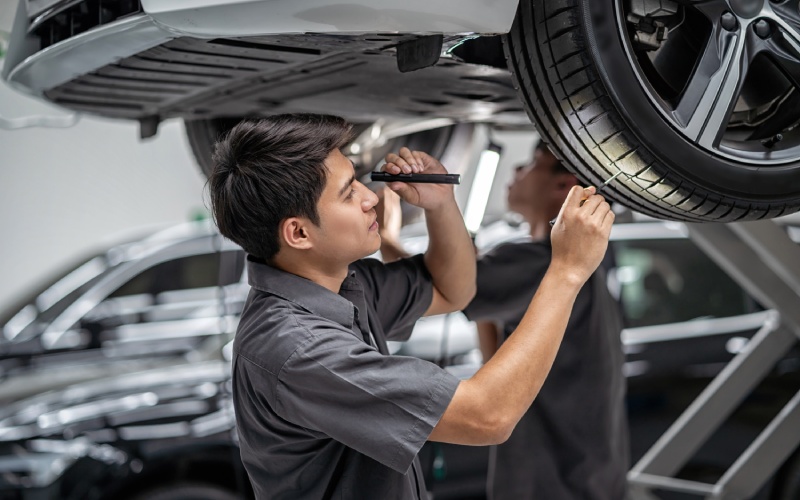
A professional tire inspection can give you more than a quick yes-or-no answer. A technician can measure tread depth at multiple points, look for feathering or cupping, identify alignment concerns, check sidewall condition, and recommend whether rotation, balancing, or replacement makes sense. If you drive a Mitsubishi Outlander, Eclipse Cross, Outlander Sport, Mirage, or another vehicle, routine tire care can improve both everyday ride quality and traction readiness.
Our service approach is built around clear recommendations, factory-trained knowledge, and practical maintenance support. Tire sales, tire rotation, balancing, alignments, multi-point inspections, brake service, battery testing, and related maintenance all contribute to safer driving. Tires do not work in isolation; they interact with steering, suspension, brakes, and electronic stability systems. When those systems are maintained together, your vehicle is better prepared for Utah’s varied road conditions.
Frequently Asked Questions:
Is 5/32 inch of tread required for every road in Utah?
No. The 5/32 inch benchmark is especially important for traction law conditions and snow travel readiness. Ordinary tire legality may involve a lower minimum, but that does not mean the tire is suitable for restricted winter routes.
Can I use chains instead of snow tires?
Chains or approved traction devices may satisfy certain restrictions when properly installed and allowed for your vehicle. Always follow UDOT postings and your owner’s manual, because some vehicles have chain clearance limitations.
Should I replace tires at 4/32 inch?
At 4/32 inch, replacement should be seriously considered if you travel on wet, snowy, or restricted routes. The tire may still roll normally, but its ability to stop and grip in poor conditions is reduced.
Do I need the same tire type on all four wheels?
Matching tires are strongly preferred, especially on AWD vehicles. Significant differences in tread depth, size, or type can affect handling and may interfere with drivetrain operation.
Utah’s Traction Law is easier to manage when you prepare before restrictions appear. Know your tire rating, measure your tread depth, understand what AWD and 4WD actually provide, and keep chains or approved devices available if your route may require them. With the right inspection and service support, you can approach Utah roads with greater confidence and fewer surprises.
Request more 2026 Used information
Categories:
Used Parts