


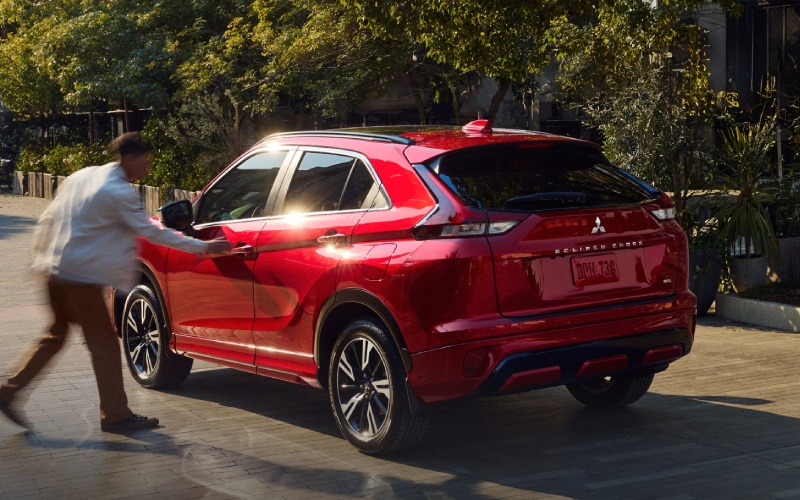
Southtowne Mitsubishi - Which AWD and driver-assist setup gives more confidence on Wasatch Front commutes around Provo, UT?
When shoppers ask whether the 2026 Mitsubishi Eclipse Cross or the 2026 Honda HR-V inspires more day-to-day confidence on the Wasatch Front, the conversation quickly circles around two areas: the hardware that actually puts power to the ground, and the driver-assist tech that keeps you informed and in control. Both are comfortable compact SUVs. But if you live with black ice patches on shaded streets, gusty crosswinds near the mouth of the canyon, and steep neighborhood grades, the details of AWD and camera coverage matter as much as a clean interior layout or a sleek profile.
The Eclipse Cross is built around Super-All Wheel Control (S-AWC), standard across the lineup. S-AWC does more than send torque to the rear when slip is detected. It layers on integrated yaw control and selective braking to help the vehicle trace the line you intend. Pair that with Tarmac, Snow, and Gravel modes, and you are tailoring the system to match your surface, not just your speed. The HR-V’s available Real Time AWD with Intelligent Control System monitors conditions and responds effectively for rain and light snow. However, it lacks the extra layers of Gravel or Tarmac logic and is not standard. On a morning when the asphalt is dry in town but the shoulder is gritty at your trailhead, that distinction shows.
How visibility tech changes tight spaces
Utah drivers inevitably squeeze into crowded lots, steep driveways with low stone walls, and trailheads with uneven berms. That is where an available Multi-View Camera System on the Eclipse Cross feels like the right tool. A 360-degree view gives you perspective when you need it most—backing around a snowbank, nosing over a curb cut at a busy park, or centering between boulders at a scenic overlook. The HR-V offers a solid rearview camera and, on EX-L, parking sensors. Helpful, yes—but not the same as an overhead stitch that shows every corner of the vehicle in context, which can save time, stress, and scuffed trim.
Power delivery that fits Utah elevations
The Eclipse Cross’s 1.5-liter turbocharged engine is tuned for usable torque at lower revs. That means less drama merging onto quick-moving segments of I-15 or climbing grades without constant pedal prodding. The HR-V’s 2.0-liter naturally aspirated engine is refined and predictable, with linear response in city driving. On steeper grades or with a full cabin of people and weekend gear, the turbo advantage can be the difference between easing into a gap and waiting another exit. The Eclipse Cross’s available paddle shifters also lend fine-grain control on long descents, an underrated comfort for frequent canyon commuters.
Convenience that stacks up to daily life
It is easy to underestimate how often you will use hands-free convenience—until you have it. An available Handsfree Power Tailgate on the Eclipse Cross is a standout for grocery runs and garage maneuvering, especially when parking is snug. Mitsubishi Connect with Safeguard And Remote Services (enrollment required) with a 24-month trial adds quality-of-life perks like remote start and status checks. The HR-V counters with excellent standard wireless Apple CarPlay and Android Auto on its 9-inch Color Touchscreen, which is a win for cord-free commutes and consistent with Honda’s clean tech interface. But if you want the full suite of hands-free loading and a complete overhead view for tight spaces, the Eclipse Cross offers more of the convenience puzzle.
Driver assistance: both good, but not the same balance
Honda Sensing brings core confidence to every HR-V with features like Collision Mitigation Braking System, Road Departure Mitigation, Adaptive Cruise Control with Low-Speed Follow, and Lane Keeping Assist. The Eclipse Cross answers with Forward Collision Mitigation with Pedestrian Detection, Lane Departure Warning, Active Stability Control, Blind Spot Warning with Lane Change Assist and Rear Cross Traffic Alert on upper trims, plus the available Multi-View Camera System. On paper, these packages both read well. On the ground, the Eclipse Cross’s surround-view advantage and standard S-AWC contribute to a more grounded feel when conditions actually change under your tires.
Can the Eclipse Cross tow and the HR-V cannot?
The Eclipse Cross is rated to tow up to 1,500 pounds, giving you flexibility for a small utility trailer, a lightweight watercraft, or a pair of trail bikes on a single-axle setup. The HR-V is not rated for towing in the U.S. For many Utah households, that one capability checkmark removes the need to borrow a second vehicle for simple weekend projects or lake days.
Where does warranty fit into the decision? Mitsubishi Motors Confidence includes a long powertrain warranty, 24-hour roadside assistance, and limited maintenance coverage—assurances that align with keeping a compact SUV for many years. While Honda brings a solid reputation and thoughtful engineering, the Eclipse Cross’s coverage profile is hard to overlook if you plan to rack up ski seasons and summer miles.
Frequently Asked Questions:
Is S-AWC different from traditional AWD?
Yes. Super-All Wheel Control integrates torque vectoring and selective braking with front-to-rear torque split. In practice, it helps the vehicle follow the path you intend, and drive modes let you tune the system for Snow, Gravel, or Tarmac.
Does the HR-V’s Real Time AWD handle Utah winters?
It performs well for rain and light snow. For inconsistent surfaces—plowed-but-gritty lanes, slushy side streets, and gravel shoulders—S-AWC’s additional logic and modes offer a traction advantage and a more settled feel.
Which SUV is easier to park in tight trailhead or downtown spots?
The Eclipse Cross, thanks to its available Multi-View Camera System. HR-V’s rear camera and EX-L parking sensors help, but a stitched overhead view reduces guesswork around curbs, berms, and bollards.
Do both SUVs support smartphone integration?
Yes. HR-V includes standard wireless Apple CarPlay and Android Auto. Eclipse Cross offers Apple CarPlay and Android Auto on upper trims; if cord-free is essential, the HR-V has the out-of-the-box edge there.
Which one is better for a small trailer or gear hauler?
The Eclipse Cross. It is rated to tow up to 1,500 pounds, while the HR-V is not rated for towing in the U.S.
Ultimately, the right choice comes down to your routine. If your daily drives include changing surfaces, canyon grades, and tight parking where all-around visibility lowers stress, the 2026 Mitsubishi Eclipse Cross stacks the hardware and driver aids in your favor. If you prioritize a slick, wireless infotainment setup above all else, the HR-V’s standard interface hits the mark. For most Wasatch Front households balancing both needs, the Eclipse Cross simply covers more ground.
Southtowne Mitsubishi is serving Provo, St. George, and Tooele with knowledgeable guidance and hands-on test-drives to help you compare these two SUVs in real Utah conditions.
Request more 2026 Mitsubishi Eclipse Cross information
Categories:
Mitsubishi Eclipse Cross